
Research at Tsaobis spans a broad range of areas in ecology, life history and behaviour. We list ongoing research here, but a quick visit to the TBP publication list may be informative regarding other aspects of our work.
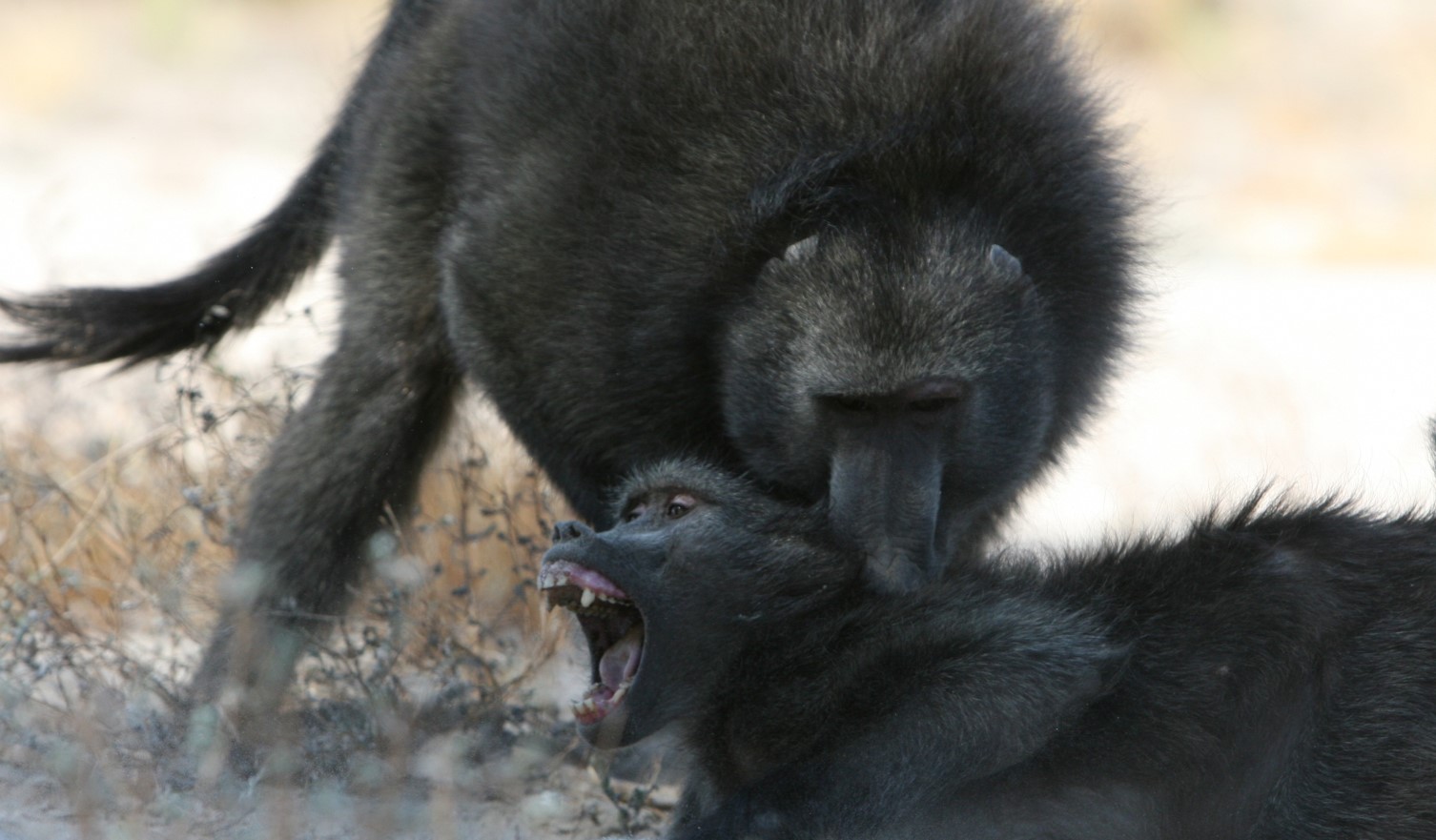
Reproductive conflicts include conflicts within and between the sexes. Our recent research has investigated the occurrence of sexual coercion, some counter-strategies to infanticide such as friendships between males and females, as well as the form and function of reproductive competition between females.
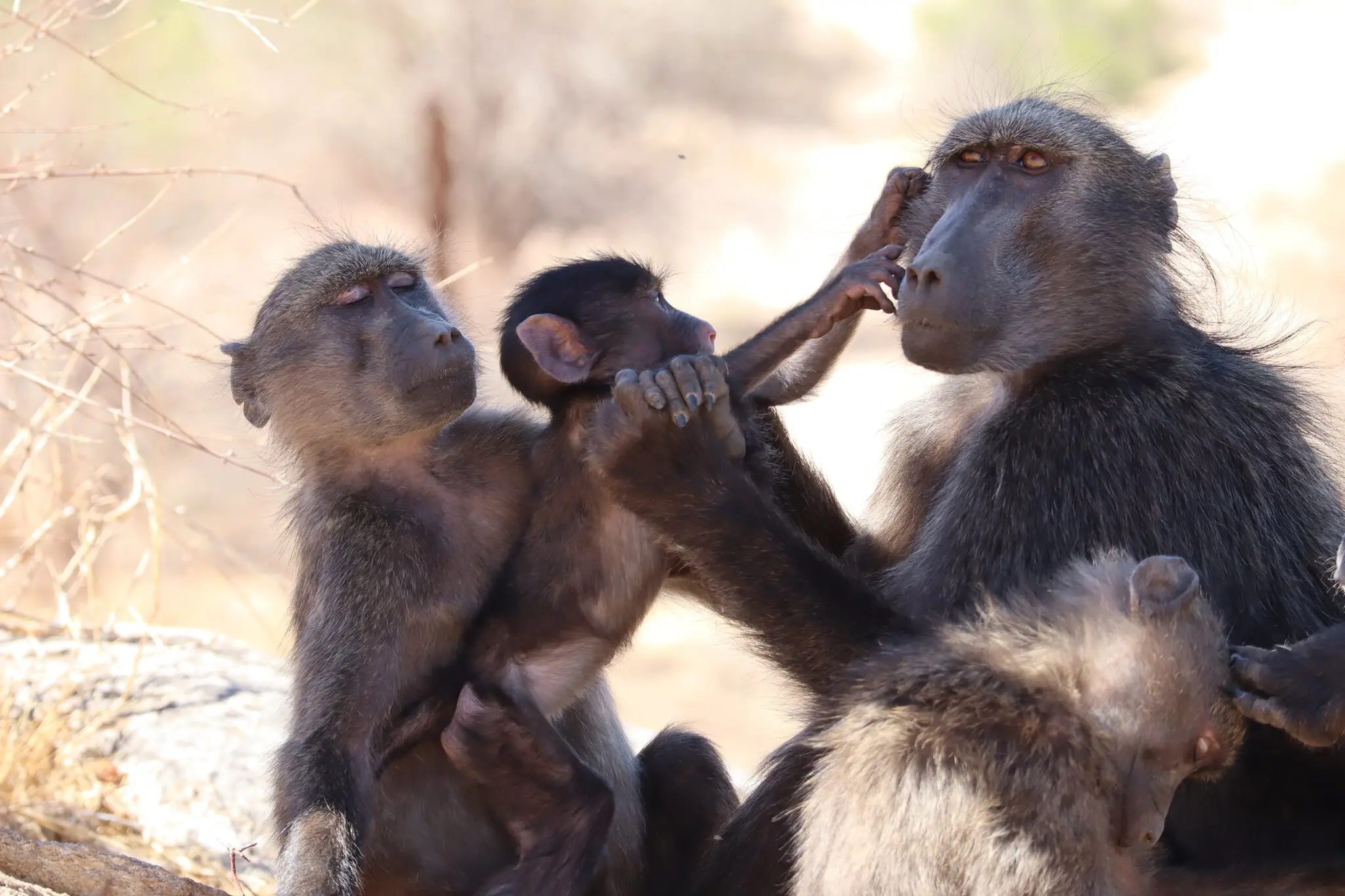
Family ecology studies individual variation in kin bonds and conflicts between relatives, such as parent-offspring relationships, or sibling rivalry. Current projects investigate the determinants and consequences of variation in paternal care, maternal styles, and sibling rivalry.
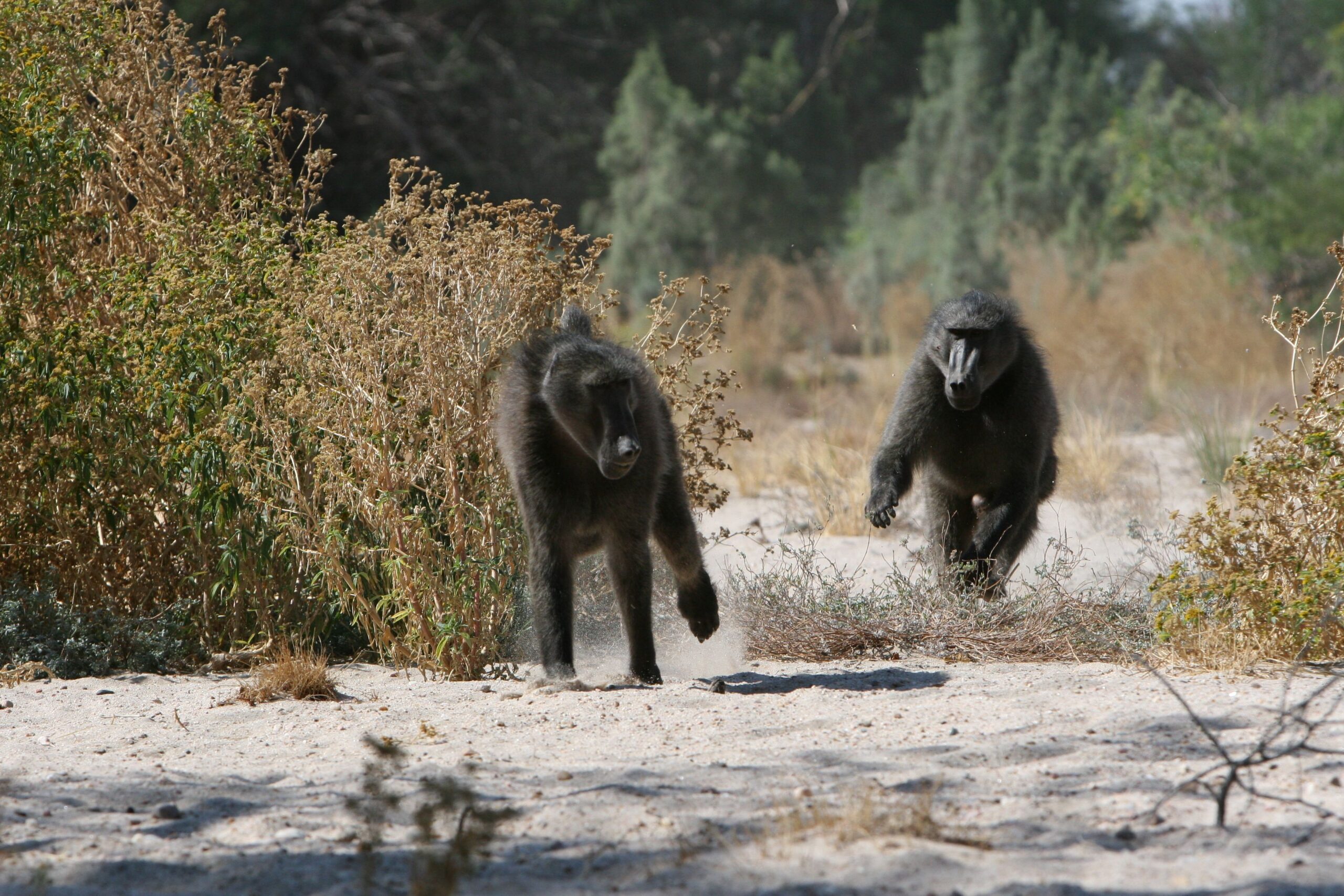
The ecology of power structures. Social relationships are structured by strict, linear hierarchies in chacma baboons. Current research investigates variation in hierarchical behaviour across time and between individuals, including its ontogeny and ecological, genetic and maternal determinants.
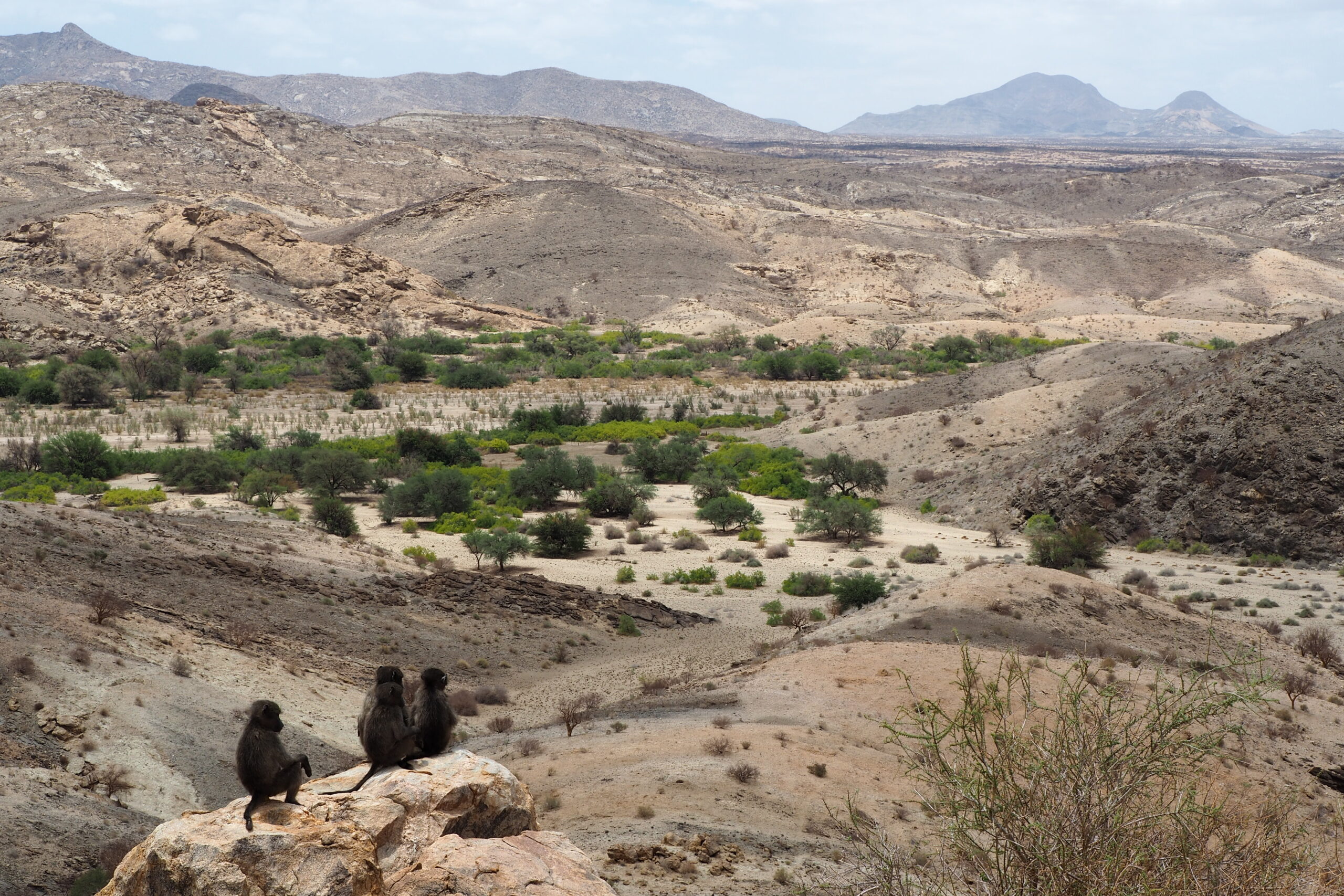
Surviving growing threats. The Tsaobis baboons range on the edge of the Namib desert. Our study is unique in documenting their lives in such an arid environment, which occasionally generate conflicts with farmers. Current research investigates how sociality modulates drought effects on mortality, as well as the dynamics of human-baboon conflicts, in the hope of improving our understanding of primate resilience to global warming and growing proximity of human settlements.
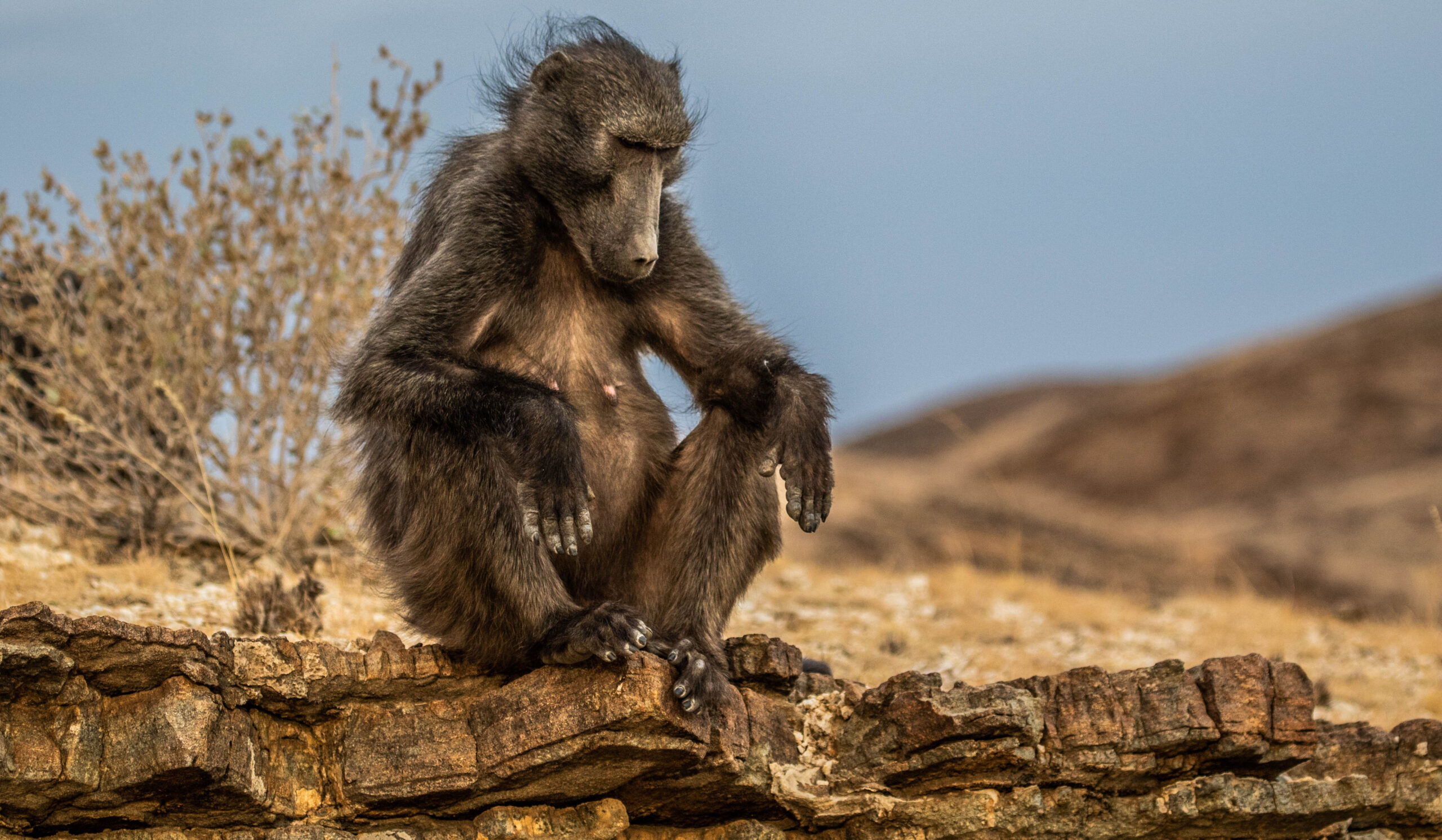
Behavioural innovation. The baboons have a wide behavioural repertoire, but we sometimes observe new behaviours, even after 20 years of field study. Current research combines philosophy and ethology to reflect on what is an innovation, study how and why these occur and are transmitted (or not).


